.svg)


We have been taught to think of energy as a limitation. Something finite. Something that defines the boundaries of what we can build, what we can sustain, and how far we can go.
But this assumption no longer reflects reality.
In many regions, energy, particularly renewable energy, is not scarce. It is abundant, intermittent, and often underutilized. Solar generation peaks beyond what grids can absorb. Transmission systems lag behind production. Economic conditions prevent full integration.
As a result, energy is not consumed. It is curtailed.
This is the contradiction at the center of the energy transition. We are expanding generation capacity while simultaneously failing to use what we already produce.
The issue is not availability. It is utilization.
Energy Systems Are Not Linear
We continue to treat energy systems as if they were linear. Generate, distribute, consume. But renewable energy does not follow this pattern. It is variable by nature. It arrives when conditions allow, not when demand is convenient.
And when infrastructure cannot adapt, excess becomes loss. Not because energy is unavailable, but because systems are not designed to absorb it. This is where the real constraint emerges. Not in production, but in our inability to convert availability into value.
What we are facing is not a shortage of energy, but a mismatch of timing, location, and form. Energy is produced at one moment, needed at another. Generated in one place, required somewhere else. Available as electricity, but demanded as heat, fuel, or chemical input.
At the same time, industries that require large amounts of energy, heavy transport, steel, chemicals, remain dependent on stable, transportable energy carriers. Electricity alone cannot fully serve these sectors, particularly when energy must be stored, moved, or used across time.
These industries are not designed around intermittency. They rely on continuity, on predictability, on energy that can be dispatched when needed, not only when available. There is a structural disconnect here. Renewable systems produce energy in peaks, while industrial systems consume it as a constant. One is dynamic. The other is steady.
And between the two, there is no direct translation.
There is a gap between how energy is produced and how it is needed, and that gap cannot be closed by scaling generation alone. It requires transformation. Because without transformation, more energy does not mean more value. It simply means more inefficiency at a larger scale.
Green Hydrogen and Energy Transformation
This is where green hydrogen becomes essential. Not as a trend, and not as a symbolic step toward sustainability, but as an infrastructural mechanism. A way to convert excess renewable energy into a stable, transportable, and industrially usable form.
Hydrogen changes the nature of energy.
It allows energy to be stored beyond the moment of generation. It allows it to be transported across distance. It allows it to enter sectors that electricity alone cannot fully reach.
It turns intermittency into continuity, but this only becomes meaningful when it is approached as infrastructure. Because hydrogen is not just a fuel. It is a medium of transformation.
Through electrolysis, energy is no longer bound to time. It is no longer confined to the moment it is produced. It becomes something that can be preserved, moved, and deployed where it is needed most.
This fundamentally alters the structure of energy systems.
Instead of forcing consumption to follow generation, energy can be reshaped to meet demand. Instead of curtailing excess, it can be captured and extended. Instead of accepting variability as a limitation, it can be integrated as a condition of design.
Hydrogen introduces flexibility where rigidity once defined the system.
But its role is not isolated. It exists within a broader infrastructure, one that connects generation, conversion, storage, and end use into a continuous chain. Without this integration, hydrogen remains a concept. With it, it becomes a system.
And this distinction is critical.
Because the value of hydrogen is not in its existence, but in its ability to connect what is currently disconnected. To bridge energy across time, across distance, and across industries.
It is not an addition to the system. It is what allows the system to function.
meum tec GreenCore: Beyond Energy, Towards Impact
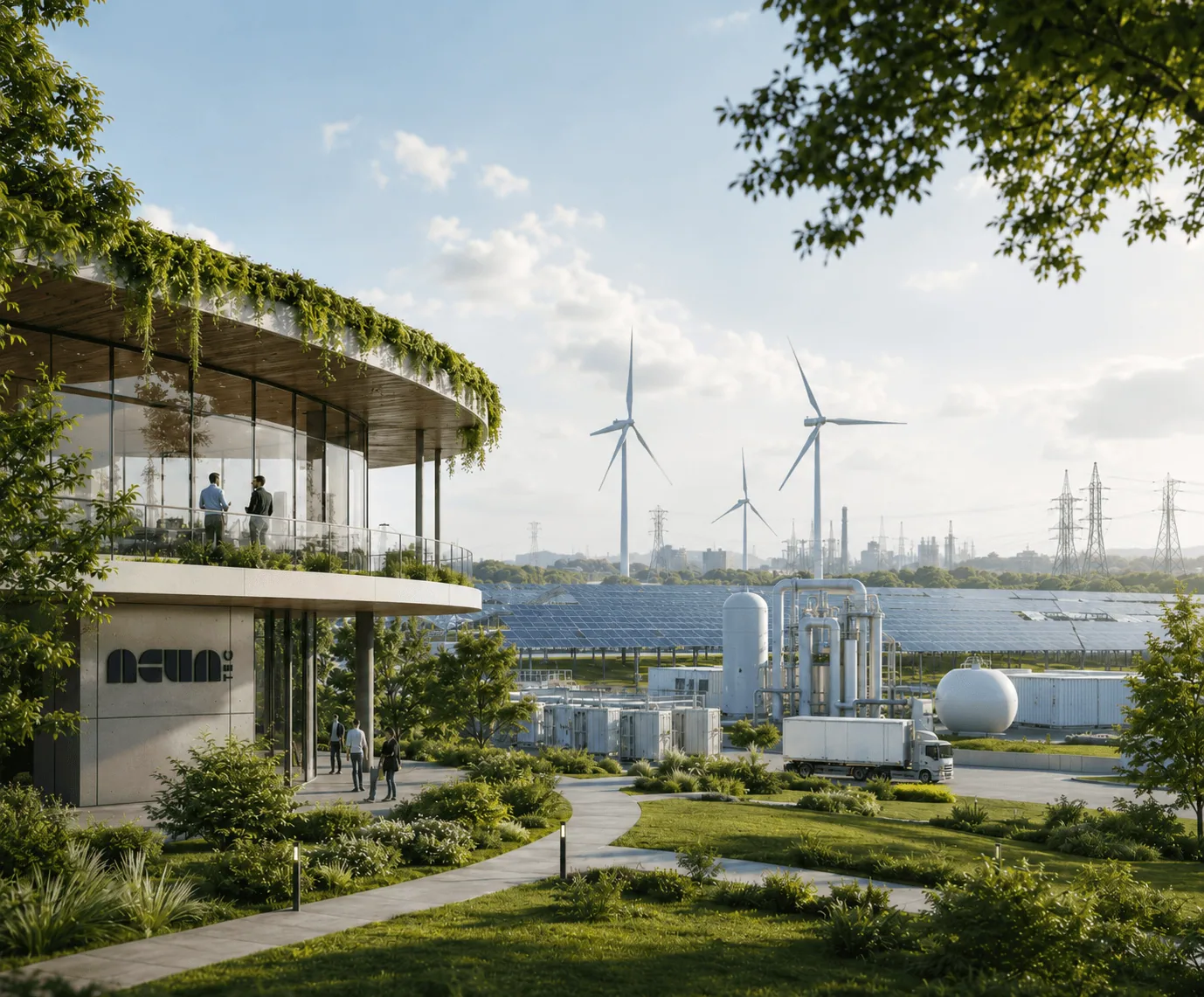
GreenCore does not begin with hydrogen as a product. It begins with a structural inefficiency: renewable energy that cannot be fully integrated into existing systems. Instead of forcing this energy into grids that cannot absorb it, GreenCore converts it at the point of generation. It aligns electrolysis with renewable output, transforming excess into hydrogen in real time.
What would otherwise be curtailed becomes stored value.
What would be lost becomes usable across industries, across geographies, and across time.
This is not an optimization layer.
It is a redesign of utilization.
Because utilization is not about making systems slightly more efficient. It is about ensuring that energy, once produced, is not wasted due to structural limitations. Therefore, GreenCore reframes energy from a momentary output into a continuous resource. It connects renewable generation with industrial demand through a medium that can move, store, and adapt. It creates a bridge between volatility and stability.
And in doing so, it changes how we think about constraint.
If energy can be converted, stored, and transported effectively, then the limitation is no longer how much we can produce. It is whether we have the infrastructure to use it. This is where most systems fall short.
They scale production without rethinking utilization. They expand capacity without addressing the structural gaps between generation and use. And as a result, inefficiency grows alongside progress.
GreenCore approaches this differently.
It treats renewable energy not as something that must be fully absorbed by the grid, but as something that can be redirected, transformed, and extended. It operates at the intersection of energy production and industrial demand, where utilization becomes the defining factor.
This is not about producing more energy. It is about making sure that energy, once produced, does not lose its value. Because in a system where energy is abundant but unused, scarcity is no longer the problem. Design is.
The future of energy will not be determined by how much more we generate. It will be determined by how intelligently we convert what we already have.
Energy is not the constraint. The constraint is whether we are capable of using it.